More than a century ago, the first aviation pioneers figured out a way to use rigid wings with flaps to generate enough force to lift a heavy craft into the sky. It was one of the great advances in human history and also the beginning of a new era in transportation. Airplanes, and the airline industry that depends on them, are now among the world’s largest businesses, with air travel producing over US $700 billion in annual revenues.
However, commercial airlines spend more than 25 percent [pdf] of their operating expenses on fuel, earning the industry a reputation for razor-thin margins that will eke out just $39 billion [pdf] in profits this year. Meanwhile, modern aircraft wings and engines have reached near-peak levels of efficiency, making it exceedingly difficult for engineers to generate additional savings.
And yet, there is one promising strategy that remains—changing the shape of the aircraft wing during flight. For three decades, engineers at aerospace companies, universities, and defense labs have been working on twistable aircraft wings that could be instantaneously and minutely adjusted to improve fuel efficiency. With these wings, aircraft designers could get closer to optimal performance by increasing an airplane’s lift-to-drag ratio, which is a measure of aerodynamic efficiency, in response to variations in
Article source: http://spectrum.ieee.org/aerospace/aviation/future-airplanes-will-fly-on-twistable-wings

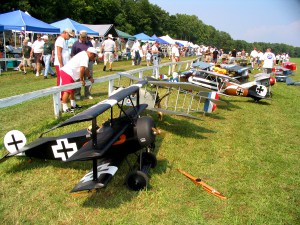 View well over 100 of the best giant-scale radio-control models of vintage aircraft in the country flying from 8 a.m. to 1:45 p.m. both days.