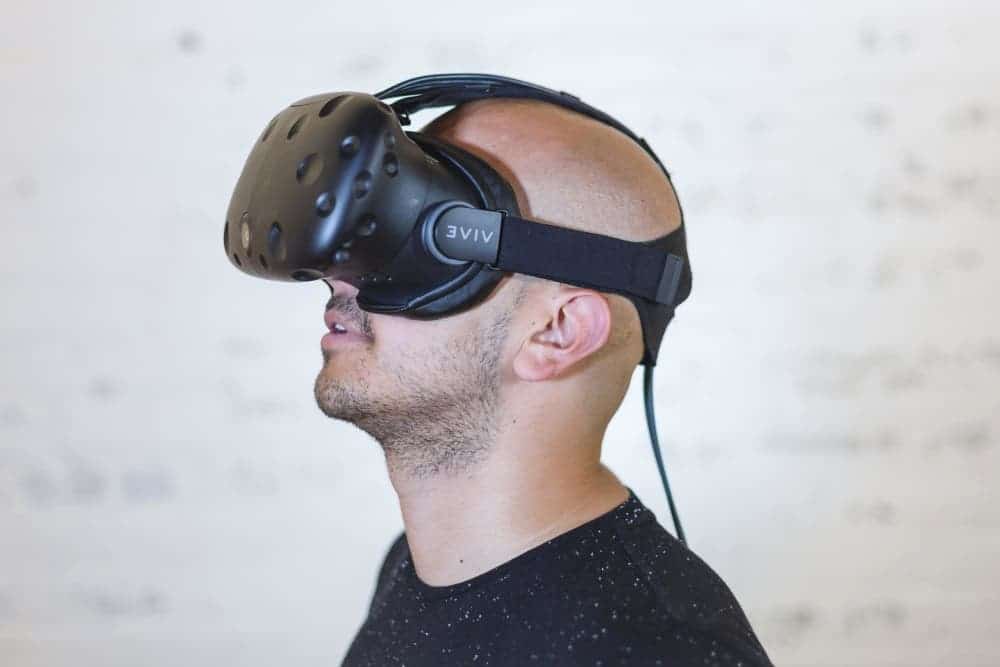
How Virtual Reality is poised to change the aviation industry

Posted in Model Airpanes | Tagged | Leave a comment

Boeing’s Grounded 737 Max — the Story So Far: QuickTake

We’ve detected unusual activity from your computer network

To continue, please click the box below to let us know you’re not a robot.

Article source: https://www.bloomberg.com/news/articles/2019-04-02/boeing-s-grounded-737-max-the-story-so-far-quicktake

Posted in Model Airpanes | Tagged | Leave a comment

NASA, MIT Test Futuristic Shape-Shifting Airplane Wing

A team of NASA and MIT engineers created a “radically” new kind of airplane wing.

Assembled from hundreds of tiny identical pieces, the pinion can change shape to control flight.

Instead of requiring separate movable surfaces (like those metal flaps you see opening and closing on conventional aircraft), the new system makes it possible to deform the wing—as a whole or in individual parts.

Tested in a NASA wind tunnel, the airborne technology features a mix of stiff and flexible components. Separate units are bolted together to form an open, lightweight lattice framework, which is covered with a thin layer of polymer material.

Each phase of a flight—takeoff and landing, cruising, maneuvering, etc.—has its own set of optimal wing parameters. So, technically, those giant metal tubes that transport thousands of people around the world are flying in less-than-ideal conditions. (Luckily, the greatest sacrifice is efficiency.)

Wing assembly under construction, created from hundreds of identical subunits and tested in a NASA wind tunnel (via NASA)

But a wing that is, say, constantly deformable could better suit the necessary configuration for each stage.

“You can make any geometry you want,” according to Benjamin Jenett, a graduate student in MIT’s Center for Bits and Atoms. “The fact that most aircraft are the same shape is because of expense. It’s not always the most efficient shape.”

Engineers took the concept a step further, creating a sort of “self-adjusting, passive wing-reconfiguration process”: The system automatically responds to changes in aerodynamic loading conditions by shifting its shape.

“We’re able to gain

Article source: https://www.geek.com/tech/nasa-mit-test-futuristic-shape-shifting-airplane-wing-1781152/

Posted in Model Airpanes | Tagged | Leave a comment

Between Two Deadly Crashes, Boeing Moved Haltingly to Make 737 MAX Fixes

Even after evidence emerged implicating a new automated flight-control system in the Indonesia disaster, the industry message was that pilots would be able to overcome glitches by following common emergency steps.

“Our pilots are trained to deal with any of these issues,”

United Continental Holdings
Inc.

Chief Executive Oscar Munoz said at a March 7 aviation event in Washington. “Just fly the darn airplane—that’s what they’re taught.”

Three days later, a 737 MAX flown by United code-share partner Ethiopian Airlines nose-dived into the ground after six minutes aloft, an eerie replay of Indonesia’s Lion Air crash.

Much remains unknown about Boeing’s internal response during the roughly five-month window between the two crashes. But recent congressional testimony, as well as interviews with executives, regulators and others suggest the American aviation industry had an overly U.S.-centric view about how to handle safety issues, and often a dismissive view of overseas pilots.

After the first crash, a top Boeing official told a gathering of U.S. pilots they wouldn’t encounter similar problems, contending they were better trained than their counterparts in other countries, according to a person familiar with the meeting.

And the company was slow in coming up with a fix to the system identified as a major factor in the two crashes, according to people briefed on the details. Even though Boeing said engineers had been

Article source: https://www.wsj.com/articles/between-two-deadly-crashes-boeing-moved-haltingly-to-make-737-max-fixes-11554164171

Posted in Model Airpanes | Tagged , | Leave a comment

The savvy Clevelander’s guide to supporting local films at CIFF

Running from March 27 through April 7, the 43rd installment of the Cleveland International Film Festival is in full swing. With a theme of “Welcome,” #CIFF43 is spotlighting 211 feature films and 237 short films representing 71 countries—but even with such a diverse cast of characters, there is no shortage of selections with Cleveland connections.


Enter the aptly named “Local Heroes” lineup, which showcases a little something for everyone—from star power (I See You, starring Helen Hunt and filmed in Greater Cleveland, and Wild Nights with Emily, in which Shaker Heights native Molly Shannon plays Emily Dickinson) to compelling Cleveland personalities (like caddie Mike Kiely, featured in Loopers: The Caddie’s Long Walk, and transgender bodybuilder Mason Caminiti, featured in Man Made).

There’s also a healthy dose of emerging local talent, with Cleveland 48-Hour Film Project Competition winner Conrad Faraj’s short Two for Twenty featured, and local filmmaker Carl Kriss selected to pitch his Lordstown documentary for the If/Then American Midwest Documentary Short pitch competition. The St. Edward High School film program also has two shorts being shown at CIFF.

For a full list of #CIFF43 films about Ohio, shot in Ohio, or made by Ohioans, check out all of the films in the “Local Heroes” competition. Plus, show some Cleveland love by supporting these four films screening this week (and get $1 off your purchase by entering code FRESH at checkout):


Float: Cleveland Heights native

Article source: http://www.freshwatercleveland.com/street-level/ciff040119.aspx

Posted in Model Airpanes | Tagged , | Leave a comment

The emerging Boeing 737 Max scandal, explained

Boeing executives are offering a simple explanation for why the company’s best-selling plane in the world, the 737 Max 8, crashed twice in the past several months, leaving Jakarta, Indonesia, in October and then Addis Ababa, Ethiopia, in March. Executives claimed on March 27 that the cause was a software problem — and that a new software upgrade fixes it.

But this open-and-shut version of events conflicts with what diligent reporters in the aviation press have uncovered in the weeks since Asia, Europe, Canada, and then the United States grounded the planes.

The story begins nine years ago when Boeing was faced with a major threat to its bottom line, spurring the airline to rush a series of kludges through the certification process — with an underresourced Federal Aviation Administration (FAA) seemingly all too eager to help an American company threatened by a foreign competitor, rather than to ask tough questions about the project.

The specifics of what happened in the regulatory system are still emerging (and despite executives’ assurances, we don’t even really know what happened on the flights yet). But the big picture is coming into view: A major employer faced a major financial threat, and short-term politics and greed won out over the integrity of the regulatory system. It’s a scandal.

The 737 versus 320 rivalry, explained

There are lots of different passenger airplanes on the market, but just two very similar narrow-body planes dominate domestic (or intra-European) travel. One is the

Article source: https://www.vox.com/business-and-finance/2019/3/29/18281270/737-max-faa-scandal-explained

Posted in Model Airpanes | Tagged , | Leave a comment

Where ideas take root

The Veterinary Entrepreneurship Academy is training the next generation of veterinary business leaders.

Written by in April 2019

Inspiration for the Veterinary Entrepreneurship Academy began in the fall of 2010 when Adam Little, then a student at Ontario Veterinary College, had an idea to help veterinary practices connect with their clients through a mobile app. While most of his colleagues were studying physiology, Little was learning about prototyping, pitching and product development.

His motivation was clear: If our profession was trying to help as many patients as possible, we should invest our time and energy in enhancing our systems of care as much as enhancing individual patient care.

Through that journey, two things became clear:

  • The skills and experiences one needs to turn an idea into business reality are incredibly valuable regardless of the veterinary career direction one chooses.
  • The education and support needed to develop those skills were lacking.

Texas AM’s Involvement

Fast forward to 2015. Dr. Adam Little and Dr. Eleanor Green, Texas AM’s veterinary college dean, sat down to discuss how to bridge the gaps. They wanted students to realize that running a business, whether a traditional veterinary clinic or a business developing a new product, is more than just a hassle. Running a business, they knew, can be a source of great pride

Article source: https://todaysveterinarybusiness.com/where-ideas-take-root/

Posted in Model Airpanes | Tagged | Leave a comment