Berkshire Hathaway Chairman and CEO Warren Buffett speaks at the 2019 Berkshire Hathaway Annual Shareholders Meeting in Omaha, Nebraska. Buffett discusses the risks of taking on leverage and alternative investments.
A charter plane carrying 143 people and traveling from Cuba to north Florida ended up in a river at the end of a runway Friday night, though no critical injuries or deaths were reported, officials said. (May 4)
MIT neuroscientists have performed the most rigorous testing yet of computational models that mimic the brain’s visual cortex.
Using their current best model of the brain’s visual neural network, the researchers designed a new way to precisely control individual neurons and populations of neurons in the middle of that network. In an animal study, the team then showed that the information gained from the computational model enabled them to create images that strongly activated specific brain neurons of their choosing.
The findings suggest that the current versions of these models are similar enough to the brain that they could be used to control brain states in animals. The study also helps to establish the usefulness of these vision models, which have generated vigorous debate over whether they accurately mimic how the visual cortex works, says James DiCarlo, the head of MIT’s Department of Brain and Cognitive Sciences, an investigator in the McGovern Institute for Brain Research and the Center for Brains, Minds, and Machines, and the senior author of the study.
“People have questioned whether these models provide understanding of the visual system,” he says. “Rather than debate that in an academic sense, we showed that these models are already powerful enough to enable an important new application. Whether you understand how the model works or not, it’s already useful in that sense.”
MIT postdocs Pouya Bashivan and Kohitij Kar are the lead authors of the paper, which appears in the May 2 online edition of Science.
For owners and charter guests seeking unique and adventurous experiences, having a submersible on board is very appealing. With some of the latest models on the market able to reach staggering depths, submersibles can dive into remote parts of the ocean and get up close and personal with marine life that was once inaccessible. The idea of having a submersible on board is no doubt also an exciting one for many captains and crew, but it does come with concerns about complex operations and maintenance procedures.
The submersible experience
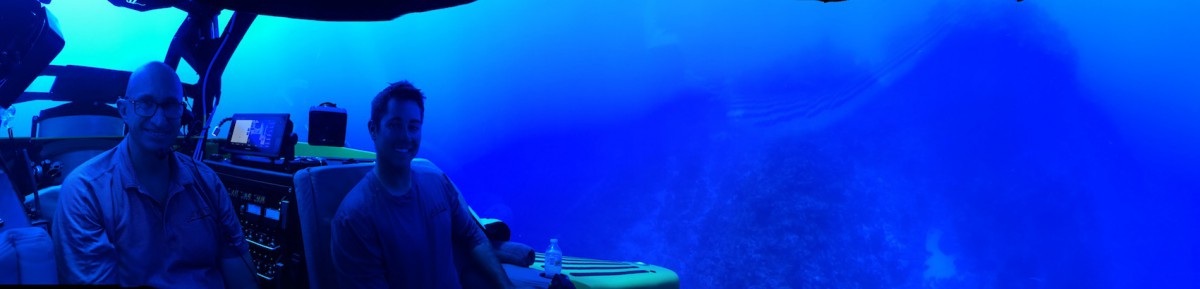
On board the 55m Damen yacht support vessel Axis is a Triton 3300/3 submersible that can reach depths of 1,000 metres with two passengers and a pilot. Captain Les Annan says just going underwater in the submersible is an amazing first-time experience for most people. “Once you go below 35 metres [the safe scuba-diving limit], you are the first human to see whatever you see,” he adds. “Taking the sub to dive sites is very interesting as well as you can see so much aquatic life and geological sculptures. Being in the sub is more comfortable than scuba diving as you are dry and have communications [with the surface], with an enhanced peripheral view that you don’t get through a dive mask.”
Captain Jan Rautawaara has worked on superyachts for most of his career and has spent the past couple of years aboard the luxury cruise ship Crystal Esprit, which has a U-Boat Worx C-Explorer 3 submarine on board. He agrees
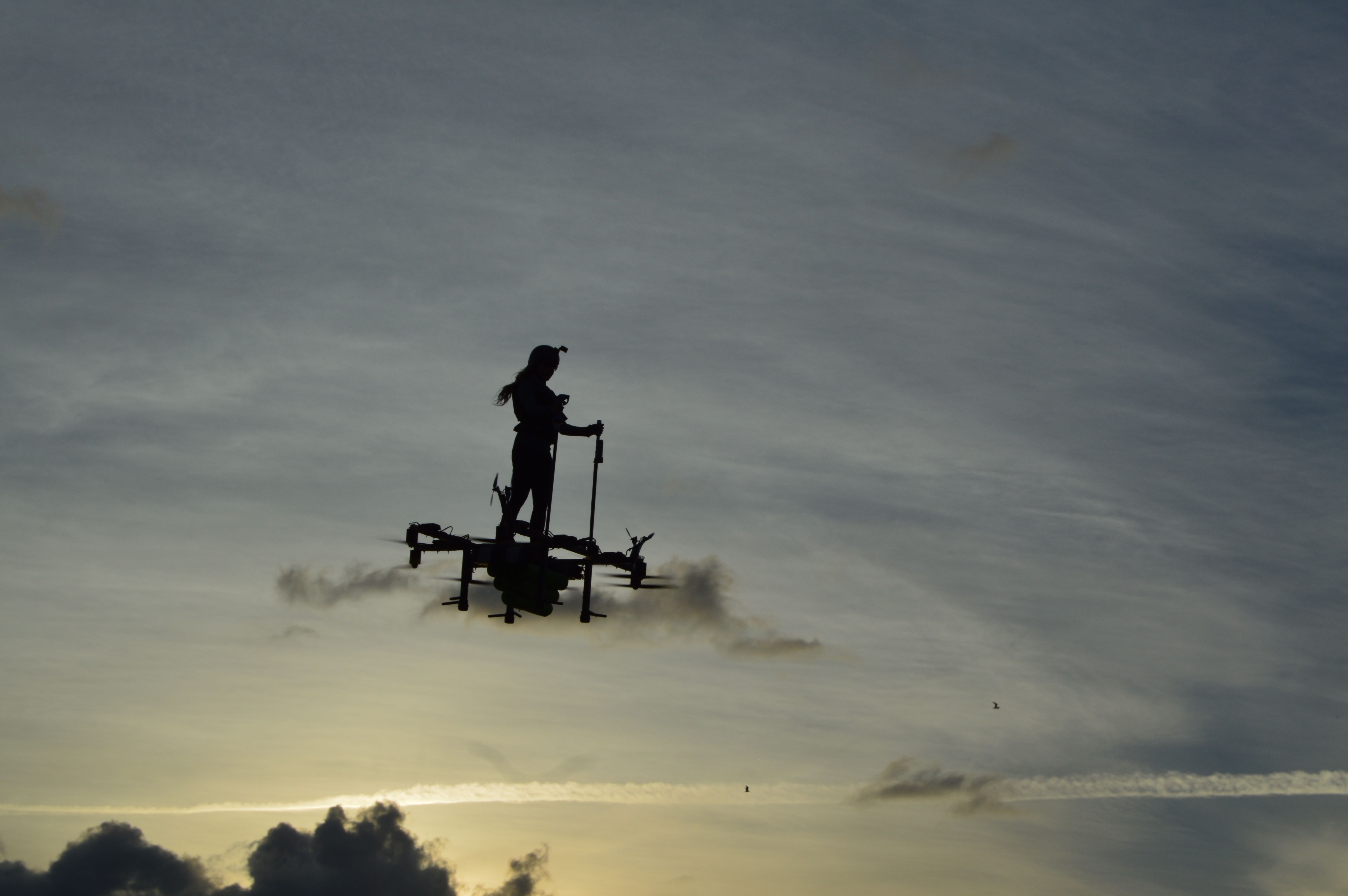
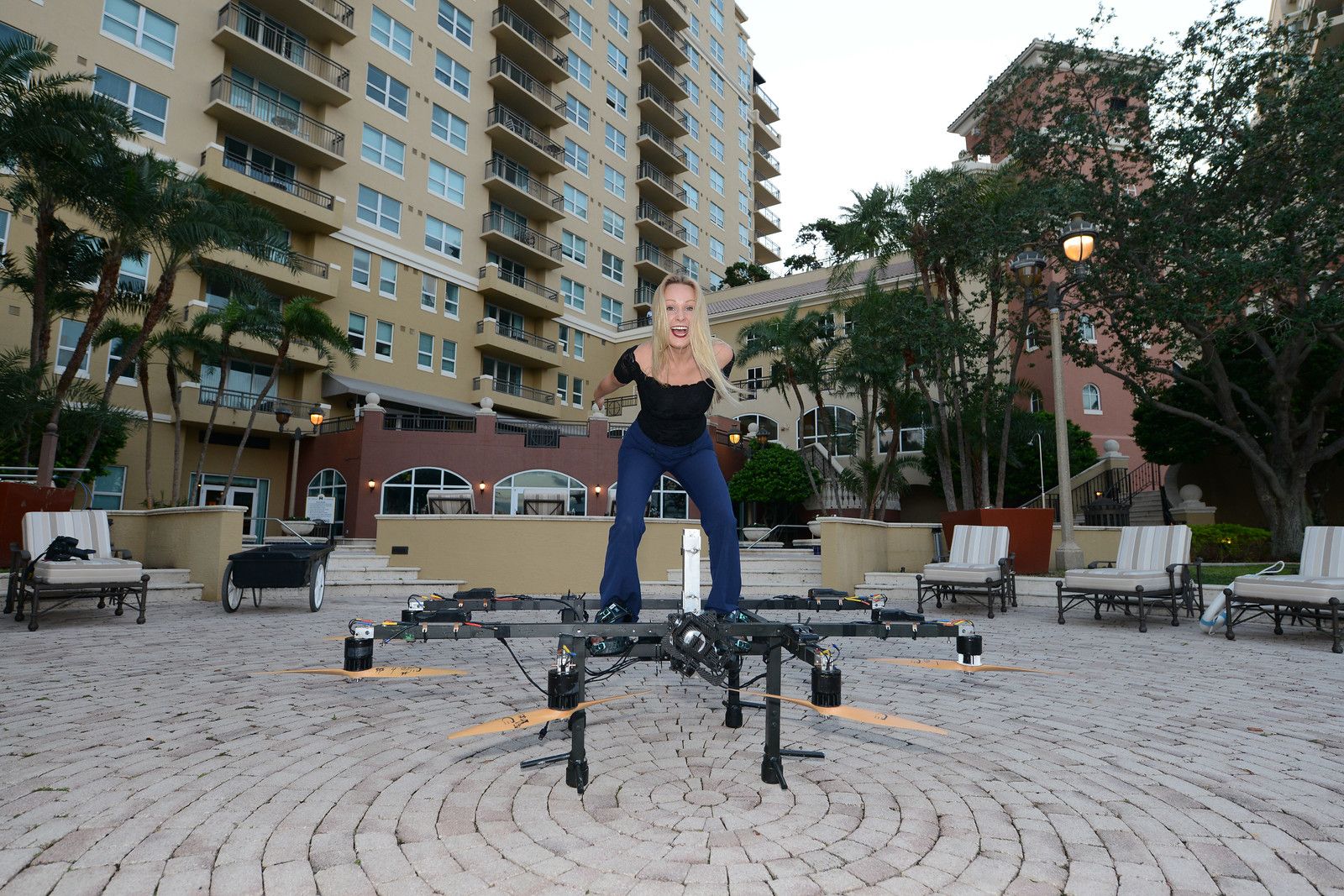
Jeff Elkins of Panama City designed a flying machine. Mariah Cain is its pilot. The pair’s prototype is a GoFly contest finalist. Courtesy of GoFly Prize, Tallahassee Democrat
Mariah Cain and Jeff Elkins have always dreamed of flying.
Not within the confines of a helicopter or airplane, but unenclosed, immersed in their surroundings and soaring over hills and waterscapes.
It’s no longer just a fantasy.
The Panama City duo has designed the Airboard, a personal flight device that lifts off the ground using eight motors, maneuvered by body movement. Cain is its pilot and project manager, and Elkins is the brains behind the mechanics, along with colleague Ray Brandes.
“Team Dragonair” is one of five Phase II winners of the GoFly Prize, a global challenge to create a safe, quiet and compact flying device that can travel 20 miles without refueling or recharging.
“We don’t really call it flying … it’s levitating, it’s lifting. You can just sit in one spot like a helicopter, but it doesn’t cost $2 million and anybody can do it,” Elkins said.
On the east side of the city lies freshwater Lake Washington, while on the west you’ll find the salty waters of the Puget Sound. Created when a glacier inched its way across the land thousands of years ago, Lake Washington is home to algae, zooplankton, and some PCB-contaminated fish. Thanks to its ocean access, the Sound is occasionally visited by orcas.
At the bottom of these two bodies of water, however, the landscape starts to change. Divers have found swords, tequila bottles, bags of garbage, and old laptops. There’s also more historically significant objects, too, like planes and shipwrecks.
Divers from the Global Underwater Explorers investigating sunken ships and planes. Kees Beemster Leverenz
Even for those with the gear and training to dive over 100 feet in frigid water, getting a sense for what these wrecks really look like can be a challenge. “The visibility is quite poor, so we’re not able to see very far,” Kees Beemster Leverenz told Digital Trends. “And on top of that, there isn’t almost any light that penetrates down past the first couple of dozen feet, maybe 70 feet or so.” Beemster Leverenz is a Microsoft software developer by day, diver by night and on many weekends. He’s part of the


 https://www.tallahassee.com/story/news/2019/05/03/panama-city-team-dragonair-develops-flying-machine-belongs-fantasy-movie-gofly-prize/3615099002/


