Topology Optimization for 3D Printing Hits the Cloud with Generate

As a manufacturing technology, 3D printing is only as powerful as the designs that it is used to create. At trade shows, one will hear countless stories about firms that explored additive manufacturing (AM), but as a means of producing traditional parts, the same designs that would be made with CNC machining or injection molding.

It’s only when the infinite geometric complexity possible with 3D printing is fully exploited that the power of AM becomes apparent. Through the implementation of microlattices and organic structures, it’s possible to create shapes that may yield lighter weight and even stronger parts that can only be made with 3D printing.

Creating those designs, however, is no easy task. Most engineers have been trained to create parts for traditional manufacturing methods and may have a hard time breaking old habits. More importantly, many shapes optimized for 3D printing are almost impossible to invent manually simply due to the math involved, as it relates to the forces of physics. And, because CAD software is still catching up to the 3D printing revolution, these tools are only now beginning to be incorporated into existing design software.

One start-up is attempting to make the process of design optimization for 3D printing as easy as it can possibly be, without a dedicated design software or even a knowledge of how this optimization is performed. The firm is called Frustum, and its geometry kernel, Generate, has already caught the attention of some big names—well, one in particular: Siemens.

The Kernel of Generate

“I founded Frustum

Article source: http://www.engineering.com/3DPrinting/3DPrintingArticles/ArticleID/13803/Topology-Optimization-for-3D-Printing-Hits-the-Cloud-with-Generate.aspx


Posted in Model Airpanes | Tagged | Leave a comment

Can A Denver Company Get Its Electric Plane Off The Ground?

In an unmarked hangar next to a busy runway at Denver’s Centennial Airport, George Bye, the CEO of Aero Electric Aircraft Corporation (AEAC), peers into the cockpit of a small plane. The aircraft is missing its nose, a propeller, and wings. The synthetic leather seats are sitting askew on a workbench not far from two rectangular batteries, miscellaneous power tools, rolls of wire, and a dry-erase board crammed with instructions for the engineering team. To the untrained eye, the workspace looks like a messy man cave. But in the shell of the sleek white aircraft, Bye sees the future of general aviation. 

If all goes according to Bye’s plan, the two-seat plane—dubbed the Sun Flyer—will be the first electric aircraft approved by the Federal Aviation Administration for general aviation in the country. Unlike the small planes that whine on the runway outside the hangar door, the Sun Flyer does not have an internal combustion engine. Instead, it features a basketball-size electric motor and 10 batteries fueled by energy from the grid. 

Without a noisy, pollutant-spewing internal combustion engine, the Sun Flyer would offer important environmental advantages over traditionally powered flying machines. But what Bye, a 59-year-old engineer and former Air Force pilot, is most excited about is the money it could save: He estimates it would cost about $1 per hour of flight using an electric motor. For comparison, a gasoline-fed engine sets a pilot back about $50 per hour (depending on gas prices, of course).

Bye anticipates the aircraft could be used

Article source: http://www.5280.com/news/magazine/2016/11/can-denver-company-get-its-electric-plane-ground

Posted in Model Airpanes | Tagged , | Leave a comment

New Minnesota Rainfall Record – A Better Way to Rate Winter Storms? Real Cold Front 8-10 Days Away

We Still Can’t Predict Snow Down To The Inch

“Paul, there’s a big discrepancy between your weather app and what you’re publicly predicting at Star Tribune. What’s going on?” Welcome to my world.

Apps are great, but they don’t capture all the nuance, variation or challenges with a specific forecast. That’s where the human element comes in: meteorologists add value by adding context, perspective and analysis.

Not even Siri can do that. Yet.

My favorite college professor told us to “forget about inches” and classify storms into 3 categories: nuisance, “plowable” and crippling. I’ve been borrowing the scale since 1983 at KARE-11. It has stood the test of time.

Yesterday’s hail-producing T-storms are long gone; cold exhaust on the backside of the storm sparks a wintry mix into Thursday – a nuisance coating is possible. The coldest air of the season arrives late next week with highs in the 20s.

That’s 20s ABOVE zero.

Some moderation is likely by mid-December as winds blow from the Pacific, not the Arctic.

Any big, meaty storms pass south of Minnesota into next week, but I’m bullish on a white Christmas this year. We are due. 


Minnesota Annual Precipitation Record Broken. It’s official; Waseca wins the Golden Rain Gauge Award, with a record 53.78″ of precipitation (and counting). Details from the Minnesota DNR: “Waseca, in south central Minnesota, has set the official state precipitation record, coming in with the highest annual precipitation total for a National Weather Service Cooperative Observation

Article source: http://www.startribune.com/new-minnesota-rainfall-record-a-better-way-to-rate-winter-storms-real-cold-front-8-10-days-away/403386256/

Posted in Model Airpanes | Tagged | Leave a comment

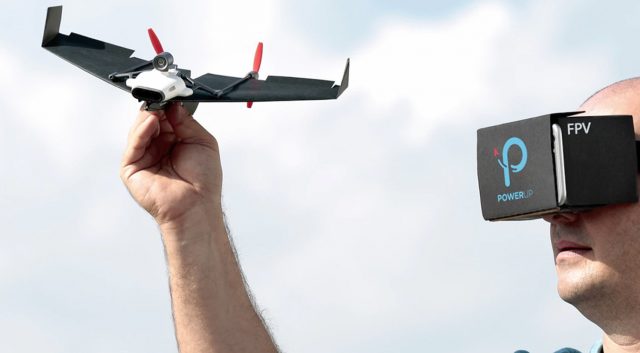
Powerup FPV: See yourself fly in your own paper-airplane drone

Powerup FPV allows you to see as you fly

Making paper airplanes is a time-honored hobby. I’ve been doing it since I was a kid, but I didn’t imagine a time would come when it’d be possible to could see what it was like to be on board. With the FPV paper-airplane drone from Powerup Toys, now you can. Once folded, the paper plane supports a frame that includes control electronics, two motors, a battery, and a tiny camera. There is also a microSD slot for recording your exploits. A boon for do-it-yourself-ers the FPV kit lets you construct, or even design, your own plane. This brings back the challenge of paper airplanes and of drone flying.

Early drones were a real challenge to fly. Not as hard as RC planes, and certainly not as hard as RC helicopters, but they easily went awry. The foam protective shell on my original Parrot AR has the cracks to prove it. Recent models include precise controls, automated flying modes, and even collision avoidance. If you’re looking for a way to get more hands-on with your flying, the new Powerup FPV paper-airplane drone may be perfect for you.

https://www.extremetech.com/extreme/240228-powerup-fpv-see-fly-paper-airplane-drone

Posted in Model Airpanes | Tagged , | Leave a comment

F-35 Deal: As Always – Israeli Air Force Got What It Wanted, Despite Costs and Concerns

Sunday’s cabinet decision to approve the acquisition of 17 F-35s for the Israel Air Force is a belated, necessary result to the partial decision the previous government made nearly three years ago. Then, only a partial equipping was approved in an unusual step that would have left the IAF at the end of the acquisition process with a squadron and a half. It would have been an operational hybrid, which would likely not allow long-term planning and conducting of missions on an ongoing basis. According to the decision, the IAF will have a full complement of two squadrons by 2021 or 2022.

The question whether to increase the number to three squadrons will come in a few years.

The F-35 is a very controversial plane. It is the most expensive acquisition plan in the history of the American security apparatus. So far it has had a long series of failures, schedule delays and growing expenses. In contrast, the IAF insists that this is the best if not only plane for its needs.

Because the air force particularly excels in organized and effective administrative work, and because it is precisely the subject that no one among the top of the establishment understands like pilots, there was never any doubt that this is how the controversy would be resolved. Remember how Prime Minister Benjamin Netanyahu declared a year ago after the approval of the gas deal “when I want something, I get it”? Were these

Article source: http://www.haaretz.com/israel-news/1.755888

Posted in Model Airpanes | Tagged | Leave a comment

Startup Boom Technology Aims to Revive Supersonic Flights Under New Model

Ask a harried air traveler about the basics of modern flight, and you’ll probably elicit surprise when they discover commercial airplanes fly only as fast as they did in the 1950s. Given the range of aerospace advances in the past half-century, plus the technological leaps in almost every other area of human endeavor, it seems reasonable to ask: Why can’t we fly faster?

That’s the question driving a startup called Boom Technology, which says it’s time to bring supersonic jet travel into the mainstream—in a modern way. The company is pursuing speed with an audacious idea : a 45-seat aircraft that cruises at Mach 2.2 (1,451 miles per hour), faster than the defunct Concorde and certainly faster than the standard 550 mph, with fares no more expensive than a current business-class round trip, which ranges between $5,000 and $10,000.

Yet long before travelers can marvel at a quick hop across the Atlantic, Boom will need to sell the airlines not just on a technically disruptive aircraft, but also on one that can accomplish such feats of velocity cost-effectively. It must earn a solid profit—no middling returns allowed—and this, of course, has been a key reason the Concorde was an aberration rather than the harbinger of universal supersonic travel.

Boom is likely to encounter deep skepticism in a conservative industry that still relies heavily on a fundamental airplane design devised 70 years ago.  The major global airlines Boom will court operate with two cardinal maxims: It’s really hard to make money with small airplanes, and it’s really, really hard to make money with supersonic airplanes, which are renowned for

Article source: https://skift.com/2016/11/29/startup-boom-technology-aims-to-revive-supersonic-flights-under-new-model/

Posted in Model Airpanes | Tagged , | Leave a comment

Trench art remains from Camp Perry POW camp

PORT CLINTON – When an Italian soldier held captive at the Camp Perry POW camp during World War II befriended a kind prison guard, he created for him a handmade model airplane he pieced together from parts he found in and around the camp.

That prison guard, Russell Deal, kept that small gift for decades.

Today, it can be seen at Liberty Aviation Museum along with three other pieces of trench art in the museum’s “The Art of War” display.

Trench art is a decorative item created during times of war by soldiers or prisoners of war. Both often had an abundance of free time, so they passed the dull hours by creating ashtrays, jewelry or other pieces of art from the scraps they found around them. Common materials used were airplane metal, shell casings, award medals, wood and bone.

Deal’s plane was made of some kind of metal he found in camp or around town and decorated with colored beads. Gene Smith, an archivist at the museum, said it looks like Deal mounted the plane on a piece of marble that may have come from a stairway. Where he got it, no one knows, but the materials

Article source: http://www.thenews-messenger.com/story/news/local/2016/11/28/trench-art-remains-camp-perry-pow-camp/94547060/

Posted in Model Airpanes | Tagged | Leave a comment