• The year started with Central Okanagan Search and Rescue warning outdoors enthusiasts to be cautious in the backcountry due to avalanche conditions.
• Neil Snelson was in court early January to request a new trial after he was convicted for manslaughter in the strangulation death of Jennifer Cusworth in 1993. One person in the courtroom happy to see him was Jean Cusworth, Jennifer’s mother. After her daughter’s murderer had remained unknown for 18 years, that Snelson had been spending time in jail for the crime had renewed her confidence. However, Snelson’s 2011 conviction was overturned by the B.C. Court of Appeal because of an error made by the trial judge. He was freed on $75,000 bail in June. A new trial was set for Kamloops court in the spring of 2015.
• Peachlandradio.com started up with ‘golden oldies’ streamed to listeners over the Internet.
• Sopa Square, the mixed-use retail and residential development on Pandosy Street, went into receivership for a third time.
• In January, construction of the Sneena Road underpass was well underway in West Kelowna. Drivers would deal with months of being rerouted through the construction zone.
• Interior Health dealt with the H1N1 flu virus with 35 confirmed cases in the Interior and one death in the Okanagan.
• The first 3-D X-ray computer tomography microscope in B.C. came to UBC Okanagan. It was hailed as the way of the future, allowing lighter weight but stronger materials to be used in manufacturing. With magnification up to 1,000 times, internal structures
WASHINGTON — The Air Force began a major study into the future of its test-range infrastructure, one which could decide how the service runs its live-flight testing for the next 20 years.
Ed Chupein, chief for Air Force ranges, airspace and operations sustainment, told Defense News that a review is underway to provide Air Force Chief of Staff Gen. Mark Welsh with options on how to revitalize the training infrastructure.
“At a very high level, that’s to see where this enterprise fits in with all the other enterprises, whether it’s manpower installations, weapon systems, and its used for very high level guidance and then drops down and pushes down,” Chupein said.
Steven Pennington, director of Bases, Ranges, and Airspace for the Air Force, added that the focus of the review is finding how much operational infrastructure is needed to enable both current and future readiness.
“When we went into the [budget control act], we took risk in near-term readiness, and [Welsh] is saying ‘what do I need to do, not just to begin to mitigate the risk we took but to enable greater capability in the future?,’ Pennington said. “Part of that is buying 5th gen aircraft, but part of
After weeks of rumors surrounding a possible new airplane design from Mooney International, the legacy airplane manufacturer announced at Airshow China 2014 in Zhuhai that it is developing a line of two-seat airplanes named the M10 series.
The new series will start with the M10T and M10J models, both powered by Continental diesel engines.
Actual launch of the new models is estimated in 2017.
Both also will feature the same sleek composite fuselage design with the trademark forward canted vertical stabilizer that makes identifying Mooney airplanes easy.
Jared Absher, director of sales and marketing at the Kerrville office, said “composite” as a building material, compared to aluminum, is similar to fiberglass and is a carbon fiber product.
Absher said using this material provides a significant reduction in weight.
Thomas Bowen, CEO in Kerrville, said composite doesn’t suffer fatigue or corrode, while aluminum or other metals have life-limiting structural components.
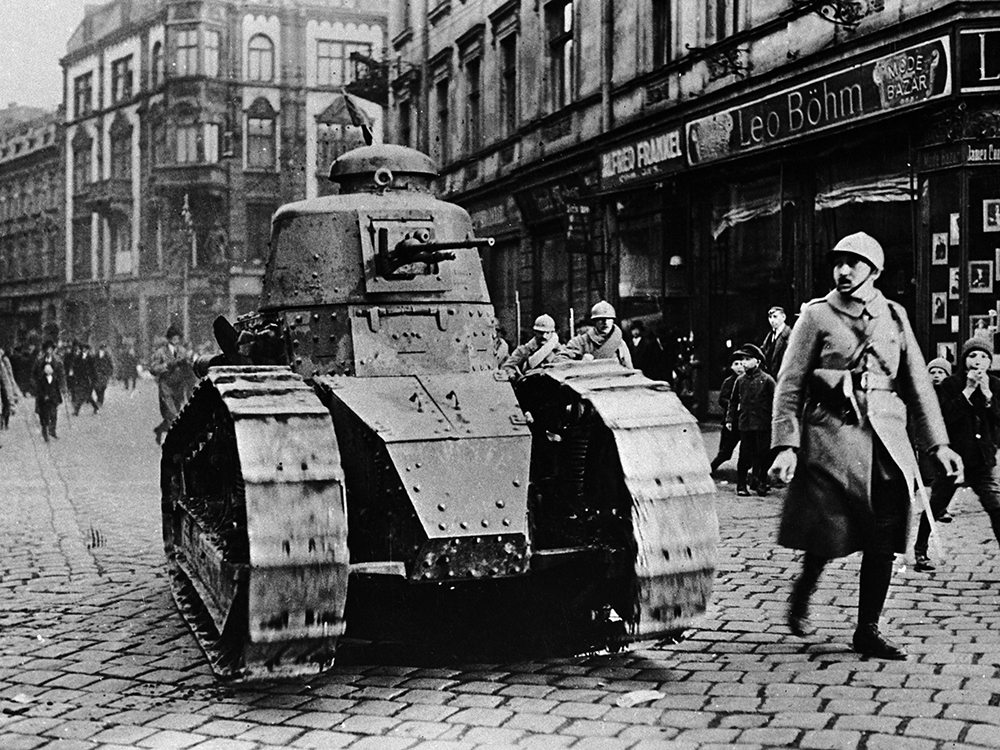
The Tank – The first great tank was arguably France’s Renault FT. Cheap, lightweight and maneuverable, it was designed to overwhelm enemy firing positions through sheer numbers. It’s impact may have been mostly psychological, with the mere appearance of tanks giving demoralized German infantry an excuse to surrender, but it showed how important armor would be. THREE LIONS/GETTY
THREE LIONS/GETTY
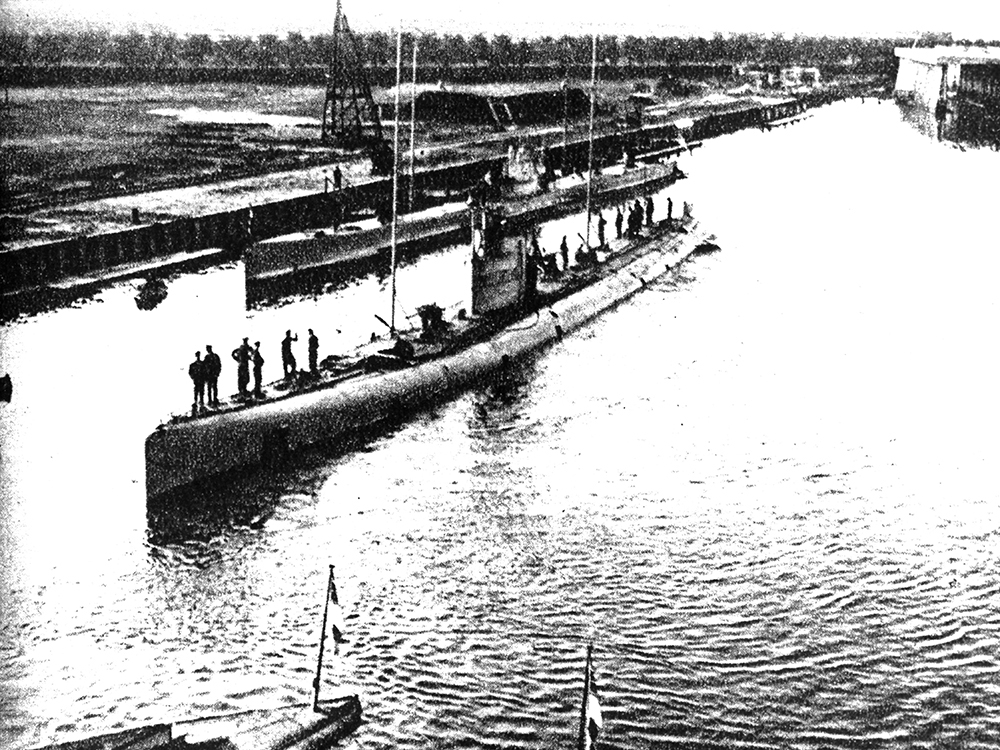
The Submarine – For British merchant vessels, few things were as terrifying as the submarine. German U-Boats sunk 5,000 ships during World War I, as part of a war of attrition meant to literally starve the British into submission. Submarines today, with their nuclear-tipped missiles, have only gotten scarier—and remain just as hard to find. dpa/picture-alliance/dpa/AP
dpa/picture-alliance/dpa/AP
The Airplane – Though the Allies won the war, the Germans gave us the Fokker Dr.1 triplane, one of the most recognizable aircraft in the early twentieth century (think Red Baron) and one that helped launch dogfighting as a new form of combat.
Less famous than the Red Baron’s Fokker Dr.1, the Curtiss JN-4 (Jenny) biplane helped kick-off civil aviation in post-war America. The Jenny was used to train a new generation of pilots following the war.
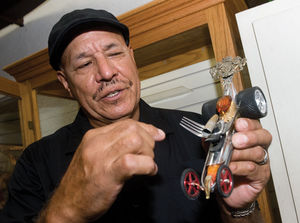
Joe Sanchez discusses each part of his model car Sunday at the Porterville Historical Museum. Sanchez makes toys out of pieces of junk, such as hair pins, forks and acorns.
 THREE LIONS/GETTY