
Dassault Aviation to present Falcon fleet at Australian International Airshow

MELBOURNE, Australia – Dassault Aviation will present its Falcon fleet of large cabin, long range business jets at the Australian International Airshow, Australia’s largest and most comprehensive aviation, aerospace and defense exposition.

The six day event, which opens on February 24th, will take place at Avalon airport in Geelong, Australia. It will feature Dassault Aviation’s 5,950 nm/11,000 km Falcon 7X trijet, the fastest selling Falcon of all time; the 4,750 nm/8,800 km Falcon 900LX trijet, a class leader in both performance and fuel efficiency; and the 4,000 nm/7,400 km Falcon 2000LXS, a short-field derivative of the popular Falcon 2000LX twin.

Australia has been a key market for Dassault for almost half century. The company’s first business jet, the Falcon 20, entered commercial service ‘Down Under’ in 1967, barely two years after its service introduction in the United States. The Falcon 20 entered the inventory of the Royal Australian Air Force the same year and served in the RAAF’s transport and utility wing for 22 years before being replaced by the Falcon 900. The force flew five Falcon 900s for 13 years.

Ten Falcons are currently in operation in Australia. The fleet includes all in production Falcons, including the Falcon 7X, Falcon 900 (EX model) and the Falcon 2000LX, and is particularly active in the tourism, wine and mining sectors.

The exceptional flexibility, operating economy and comfort of Falcon business jets make them ideal in a country of continental proportions dotted with small hard to reach airfields.

The current flagship, the Falcon 7X, features advanced systems

Article source: http://www.eturbonews.com/55843/dassault-aviation-present-falcon-fleet-australian-international-

Posted in Model Airpanes | Tagged | Leave a comment

Marbleheader Dave Crowley remembers building model airplanes as a kid

It started when Tommy White and I were in the fifth grade at the Gerry School in Marblehead in 1949. We must have been around 10 when we happened on a little metal toy that we called a cap blaster, which used paper caps to propel a small projectile the size of a grape into the air.

Paper caps contained small amounts of gunpowder and made a convincing pop, at least to a child, when we used them in the cap pistols that all boys had when I was a kid. It was the detonation of the gunpowder that launched the projectile part of the cap blaster toward the sky. It had a feather that stabilized it in flight, and just like a small rocket it turned over at the peak of its trajectory and fell back to earth, usually within easy reach, or so we hoped. The metal made a satisfying ping when the cap exploded and another one when the projectile landed.

Not satisfied with a small bang or a flight below tree level, we added caps but found that four explosive caps were too many – there was a loud bang, but the metal toy split open, ruining it. What we really wanted were rockets, but fireworks were illegal in Massachusetts, and the cap blaster was as close as we could get.

Tommy was passionate about aviation of any kind, even at age 10. We graduated to model airplanes made from balsa-wood kits. I got my

Article source: http://marblehead.wickedlocal.com/article/20150218/News/150216675

Posted in Model Airpanes | Tagged , | Leave a comment

Defense R&D: Is the Reward Worth the Risk?

By Sandra Erwin

At a time when the Defense Department is eager to attract more private investment in cutting-edge technology, even the Pentagon’s top contractors are taking a step back and hedging their bets.

A growing hesitance to gamble on futuristic military hardware was the clear subtext of speeches and conversations last week at Lockheed Martin’s annual media day in Arlington, Va. The nation’s largest defense contractor derives most of its business from military sales but when it comes to next-generation technology, the company is not ready to make huge wagers.

“Are defense companies going to invest more to get new programs started? That’s more of a commercial model. I don’t see a lot of that happening in the future,” said Rob Weiss, Lockheed Martin executive vice president and general manager of aeronautics advanced development programs, also known as the Skunk Works.

Weiss runs the company’s most secretive and most celebrated operation that was the cradle of revolutionary military machines like the SR-71 spy airplane and the F117 stealth fighter. Most projects at Skunk Works are classified, and new technology development largely is funded by the Defense Department. Lockheed does not intend to make risky bets on technology for its own sake, Weiss said, and he sees similar behavior across the defense industry. “If industry is going to invest on the front end, then we’ve got to expect that you’re going to get returns on the back end,” he said. “At Lockheed Martin in general, we are being prudent with any internal dollars

Article source: http://www.nationaldefensemagazine.org/blog/lists/posts/post.aspx?ID=1753

Posted in Model Airpanes | Tagged | Leave a comment

Remanufactured Aircraft

The world is not short of updated and refurbished business aircraft. However, few can be considered truly “remanufactured” with major airframe structure, avionics, new design engines, and fresh paint and interior installed. 

The reasons for this dearth are myriad. Corporate owners (and their lenders and insurers) tend to shy away from aircraft more than 20 years old. Historically the remanufactured aircraft business has been dogged by concerns about warranty and product support. Some remanufactured aircraft don’t hold their value. Remanufactured programs that are “one offs”–as opposed to serial production–can have problems with quality control and economy. And of course there are regulatory concerns with the FAA, EASA and other regulatory agencies.

Sierra Industries

Technically, remanufactured aircraft are modified, as opposed to new, aircraft, and their data plates reflect this, said Mark Huffstutler, CEO of Sierra Industries, a Texas company that has been in the modification and remanufacturing business since 1980, most notably with Cessna Citations.

“The FAA will not allow you to throw away the old logbooks and start a new set with zero time on a used airplane,” he explained. “But what you can do is say the airplane is remanufactured and you can issue an additional data plate showing the year of remanufacture. We do that on some of our airplanes. They leave here as 2015 factory models with a complete refurbishment, but if you dig down deep enough in the logbooks you will find these airplanes still have, for example, 5,000 hours or 6,000 cycles. You can’t extinguish that. But

Article source: http://www.ainonline.com/aviation-news/business-aviation/2015-02-22/remanufactured-aircraft

Posted in Model Airpanes | Tagged | Leave a comment

State College Man was Model Aviation Pioneer

Those who know me know that one of my passions is the building and flying of radio-controlled model airplanes.

I began this hobby in 1972, and joined the State College Radio Control Club in 1981.

It was in that club that I met one of the hobby’s true pioneers, Bill Brown, who passed away in 2003 at the age of 91.

Brown was born on May 30, 1911, to upper-middle-class parents, as his father was a respected mechanical engineer. As the first son in the family, he became the fourth generation to have the name William Likens Brown. Brown’s father made sure that he had a good understanding of mechanics as a child.

In first grade, one of Brown’s classmates had a rubber-powered model airplane, which fascinated him. Rubber-powered means the plane’s propeller was powered by a twisted elastic material such as a rubber band. Later, his dad bought him a book titled “Model Flying Machines.” At age seven, Brown tried to make his first model from the book, but it did not fly. Years later, he made another one from the same plan. This time, it did fly. He and his Philadelphia neighborhood flying buddy, Maxwell Bassett, built and flew many rubber-powered models, including some that Bassett had designed.

In the 1920s, Brown built a 3-foot span Jenny biplane model. Later, he had a dream that his model had a tiny working engine in it, just like the original Jenny. This started him thinking about building a model airplane engine.

His dad had a twin-cylinder

Article source: http://www.statecollege.com/news/local-news/state-college-man-was-model-aviation-pioneer,1462908/

Posted in Model Airpanes | Tagged | Leave a comment

Teen’s model planes gain attention of WestJet and Boeing

Carly Fleischmann youtube

What happened to Carly Fleischmann? : an exclusive interview with her father

At the age of two, Carly Fleischmann was diagnosed with severe autism and an oral motor condition that prevented her from speaking. Doctors predicted that she would never intellectually develop beyond the abilities of a small child. Although she made some progress after years of intensive behavioural and communication therapy, Carly remained largely unreachable. Then, […]

Article source: http://www.autismdailynewscast.com/teens-model-planes-gain-attention-westjet-boeing/23329/snapshot/

Posted in Model Airpanes | Tagged , | Leave a comment

February 22, 2015 in News: ATV’s re-entry camera returned no images

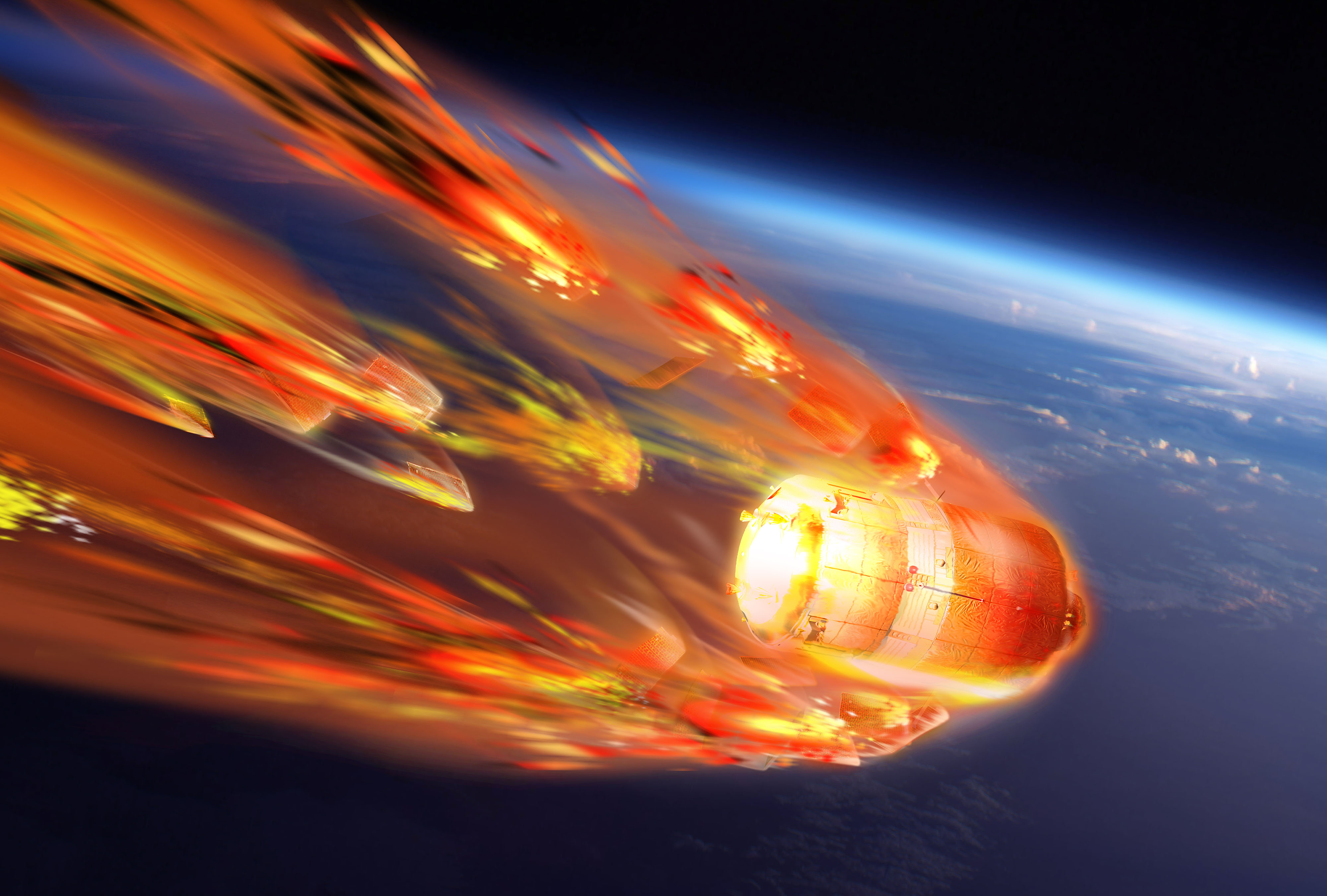
Artist's concept of Europe's Automated Transfer Vehicle breaking up during re-entry. Credit: ESA

Artist’s concept of Europe’s Automated Transfer Vehicle breaking up during re-entry. Credit: ESA

A camera packed inside Europe’s Automated Transfer Vehicle failed to transmit images from inside the disposable supply ship as it plunged through Earth’s atmosphere Feb. 15 and broke apart over the South Pacific Ocean, the European Space Agency said Friday.

The robotic cargo freighter carried a camera and instrument package cocooned inside a miniature heat shield to survive the temperatures and pressures of re-entry. While telemetry indicated the camera took nearly 6,000 pictures, none of the images were received by engineers.

ESA said the information still will help scientists study re-entry dynamics and could contribute to the design of future spacecraft to minimize the risks of space junk, but the loss of imagery from the ATV’s destructive dive back to Earth left officials with a small fraction of the data originally slated for collection during the European cargo craft’s re-entry.

The ATV’s final mission was the last chance in the foreseeable future to monitor the guided, destructive re-entry of such a large spacecraft.

The ATV was the size of a double-decker bus and capable of lofting a mix of experiments, crew supplies, spare parts, water, air and propellant to the International Space Station. At the end of the ATV’s fifth flight, the craft undocked from the space station Feb. 14 and steered toward a fiery fall into Earth’s atmosphere

Article source: http://spaceflightnow.com/2015/02/22/atvs-reentry-camera-returned-no-images/

Posted in Model Airpanes | Tagged | Leave a comment