Northrop Grumman Aims To Retain Grip on Aviation

T-X trainer concept

Almost all military contractors these days see every competition as a “must win.” And that is especially true for Northrop Grumman Corp. as it makes a big play to join the ranks of Lockheed Martin and Boeing as one of the nation’s top manufacturers of combat aircraft.

The company has set its sights on upcoming Air Force competitions that would give the winners a once-in-a-generation chance to solidify their place in the industry. The biggest prize will be the $55 billion long-range strike bomber program. Other coveted deals will be the contract to build a fleet of training jets for Air Force fighter pilots, and a $2 billion program to replace aging ground surveillance airplanes.

Northrop Grumman Corporate Vice President Thomas E. Vice said the company has spent years preparing for these high-stakes competitions.

Vice presides over Northrop Grumman’s $10 billion Aerospace Systems sector in Redondo Beach, California. He joined the company nearly three decades ago as an engineer on the B-2 stealth bomber program.

He faces the daunting task of positioning Northrop to win programs it has owned for decades and now are at risk of being seized by competitors. The company is the incumbent manufacturer in three key competitions — the new Air Force stealth bomber, the T-X jet trainer and the Joint Stars ground surveillance aircraft — and losing them would put a serious damper on its ambitions to return to the top tier of military aviation.

Vice’s immediate focus is the upcoming first flight of the company’s

Article source: http://www.nationaldefensemagazine.org/archive/2015/June/Pages/NorthropGrummanAimsToRetainGriponAviation.aspx
Posted in Model Airpanes | Tagged | Leave a comment

Keeping Cool In An Upset Situation

It has been a routine trip capped off by a routine instrument approach to your favorite big city airport, say San Francisco International (SFO), in the winter. The gear and flaps are down and the 1,000-ft. chime announces you are about to get to the most critical part of the flight. Two miles ahead and to one side on a parallel runway an Airbus 380 wanders off course. Seconds later, and quite alarmingly, you’re unexpectedly inverted with the airspeed headed up and the altimeter headed down. Can you survive?

Upset recoveries have been a hot topic for several years now and most pilots with a fair amount of simulator time will tell you they know what to do. (They probably believe that, too.) The sad truth is that unless you’ve been trained for upset recoveries in an airplane, you are probably unprepared to deal with the three related factors that can kill you. First, you must be able to execute the correct recovery procedures without making a mistake, even when the upset comes when you least expect it. Second, you must combat your natural instincts to pull back on the yoke or stick and know how to unload the airplane to just over 0 g. And the third factor is one most pilots are unwilling to discuss or even admit: You must be able to deal with fear.

At this point, experienced pilots who’ve mastered nose-high and

Article source: http://aviationweek.com/business-aviation/keeping-cool-upset-situation

Posted in Model Airpanes | Tagged | Leave a comment

Engineering Analysis Shows How to Drastically Reduce an Airplane’s Tarmac …

Flickr

Airplanes spend an awful lot of  time waiting on tarmacs. In some cases, the time a plane spends waiting on the tarmac rivals the flight itself.  A new mathematical tool developed by engineers could change that.

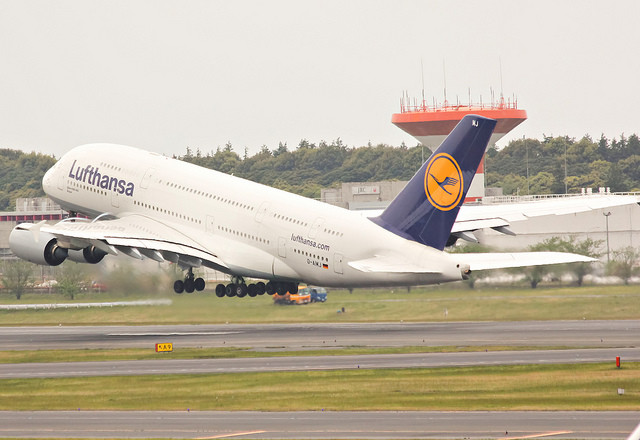
Georgios Vatistas, a mechanical engineering professor at Montreal’s Concordia University, has developed a tool capable of calculating the flow of turbulent air produced by a plane’s wing tips (also known as wing-tip vortices) once it takes off.

The impact of turbulent flow 

“Every aircraft leaves in its wake a turbulent flow of air that can be dangerous to the airplane immediately behind it,” said the professor. “That’s why there are often large separation distances between planes as they line up for takeoff. It’s a major cause of delays on the runway.”

His work could potentially reduce the standard distance between planes on tarmacs. How? Figuring out the amount of turbulence an aircraft produces during takeoff (as a result of wing tips) offers air traffic controllers a better idea of how far airplanes should be from each other.

Analyzing the plane’s specifications 

“This research will place the required separation distance on a better ground, particularly for the huge Airbus [A]380,” said Vatistas, adding that his model “takes the airplane’s specifications into account to develop a more precise picture of exactly how strong the wing tip vortices are. From that, you can accurately calculate how far away the following aircraft needs to be for safety.”

Vatisas says it’s important

Article source: http://www.engineering.com/DesignerEdge/DesignerEdgeArticles/ArticleID/10086/Engineering-Analysis-Shows-How-to-Drastically-Reduce-an-Airplanes-Tarmac-Time.aspx

Posted in Model Airpanes | Tagged , | Leave a comment

Mad Men and the California Dream

“Let’s go to Los Angeles. I’ve been there. It’s filled with sunshine.” —Pete Campbell, 1967.

“I thought I was really changing my life when I went out to California. Of course, now it sort of feels like a dream. But at the time, it felt so real.” —Pete Campbell, 1970.

A sunny day in California. Pool, palm trees, sunlight. It’s Mad Men, “The Jet Set,” season 2, episode 11. It’s the first time we see Don Draper in Los Angeles. He’s in town for an aeronautics convention. He stands over a pool, his back to the camera, smoking a cigarette. The plane lost his luggage. Air travel, cigarettes, water, suitcases, the back of Don’s head: Mad Men’s first sighting of the West Coast is a veritable Greatest Hits album of the show’s favorite symbols, Now That’s What I Call Matthew Weiner Motifs!

But before we see Los Angeles, we see the sunshine. It’s the end of “The Inheritance,” season 2, episode 10. Don’s on a plane out west, next to a sleeping Pete. (Typical: Pete will always be three seasons behind Don, moving to the suburbs right as Don moves back to the city, divorcing his first wife right as Don starts cheating on his second.) “We’re expecting clear skies en route to Los Angeles today,” says the pilot. “It should be a pleasant day. 82 degrees and clear, with a light Santa Ana wind.” Don’s life on the show has never been more precarious: Betty kicked him out, maybe doesn’t want him back. But out west, it’s pleasant, clear. Don looks out

Article source: http://www.ew.com/article/2015/05/15/mad-men-los-angeles-california

Posted in Model Airpanes | Tagged | Leave a comment

Will Volvo become another front in S.C.’s fight against unions?

Of the questions yet unanswered about the Volvo plant that will be built in Berkeley County, one of the most interesting is how Volvo will approach the issue of the plant’s potential unionization.

The answer will depend on how Volvo management views South Carolina workers, the importance the United Auto Workers puts on targeting the plant, and important strains in the history of the state and of the auto industry.

For now, Volvo isn’t publicly addressing the issue, deferring any substantive discussion at least until a “media day” May 28.

“At the end of the day, that will be a decision the workers have to make,” Volvo spokesman Jim Nichols said of the 2,000 to 4,000 workers envisioned at the plant. “Volvo has facilities in all parts of the world, and all sorts of workforce relationships. … Our pay and benefits are very competitive with the rest of the industry.”

Volvo hasn’t said the state’s anti-unionism played a role in its selection for the plant. Georgia, the other finalist, is a right-to-work state as well.

Given South Carolina’s workplace heritage, Gov. Nikki Haley and other state officials want Volvo to be nonunionized.

The state’s anti-unionism played a role in the state’s success as a manufacturing center, including Boeing’s continuing expansion of its North Charleston airplane-making plant. Boeing operations in its home state of Washington are heavily unionized – and are higher cost.

While owned by China-based Zhejiang Geely Holdings, Volvo Cars is managed largely by Europeans, and their perspectives are likely to count most as the company

Article source: http://www.independentmail.com/business/will-volvo-become-another-front-in-scs-fight-against-unions

Posted in Model Airpanes | Tagged | Leave a comment

GE engineers 3D print mini jet engine, then power it to 33000 RPMs

3d printing

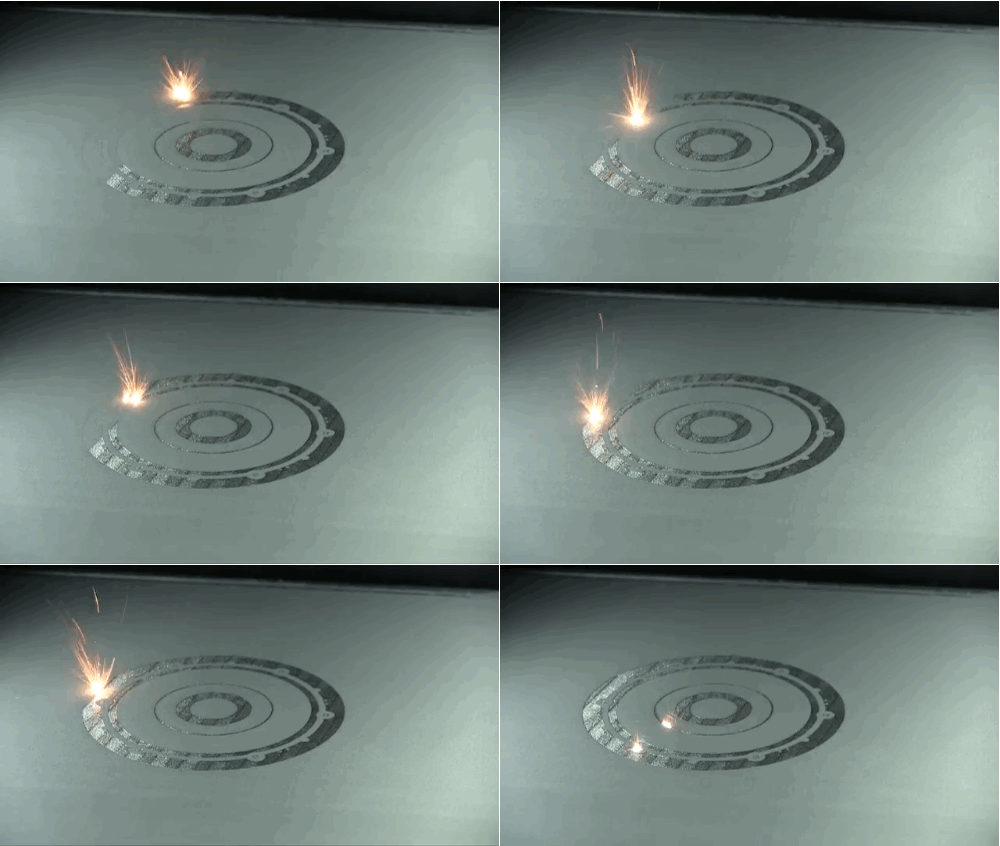
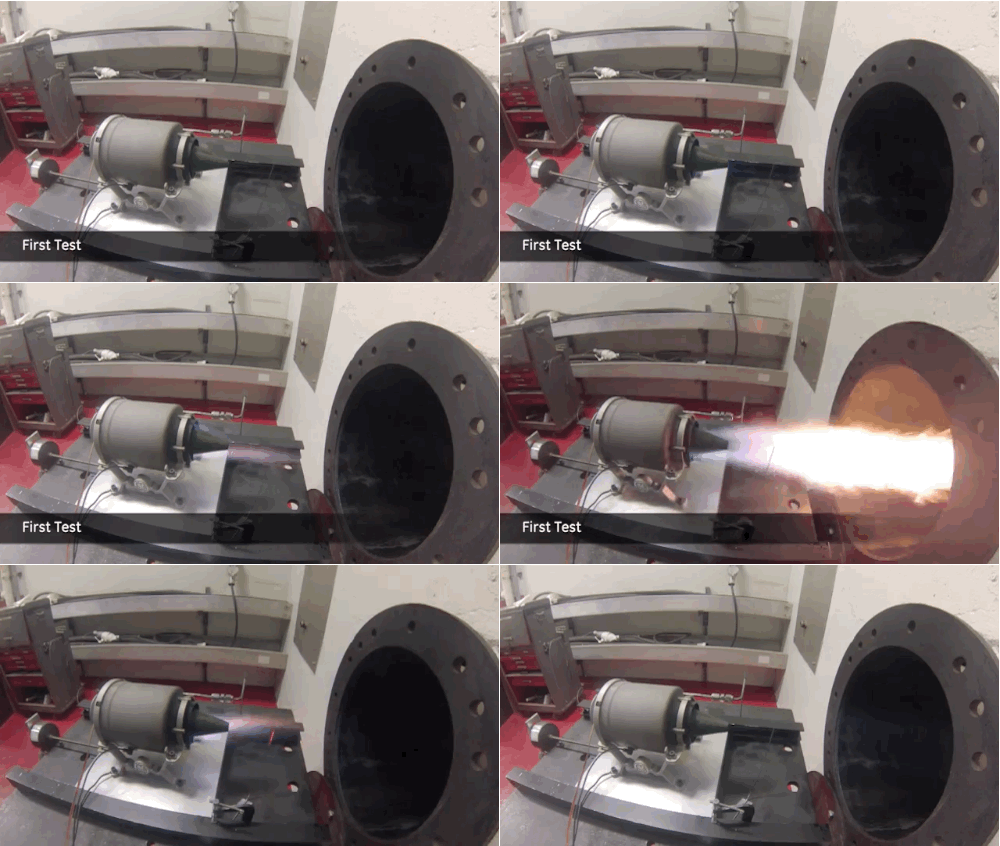
Printing your own mechanical parts or toys is really easy, not to mention fun, using a 3-D printer. But things get a bit trickier when you want to print the kind of parts that go into a car or airplane. Metal is a lot more complex to work with inside a 3D printer than polymers like ABS – the kind of film roles that get melted layer by layer to form a part of your liking once it cools down. Engineers at General Electric just demonstrated, however, that in practice it’s not that complicated to print parts out of metal alloys as it sounds. The team used additive technology to build a fully functional jet engine, then test powered it to 33,000 RPMs. The company is already using 3-D printed fuel nozzles in its next-generation aircraft engines, slated to role out in 2016.

3d printing metal tech

“We wanted to see if we could build a little engine that runs almost entirely out of additive manufacturing parts,” says one of the engineers. “This was a fun side project.”

The GE team planned, designed and built the engine over the course of a couple of years, in their spare time off from their main projects. In their lab at the GE Aviation’s Additive Development Center outside Cincinnati, they employed a next-generation technique that can make complex 3D structures by melting metal powder layer upon

Article source: http://www.zmescience.com/research/technology/ge-engineers-3d-print-jet-engine-064754/

Posted in Model Airpanes | Tagged | Leave a comment

How Do You Learn the Sex Secrets of Birds? Send in the Fembot

Considering that most of his comrades would die without ever mating, Dick was impressive.

He once pulled off 30 copulations in a single morning, 23 of them in as many minutes. Usually coy females were enamored with him. When other males got too close, he didn’t trouble himself with long, drawn-out turf wars. Instead, with a brisk thwack, Dick repelled any intruders and got back to dancing. And he danced hard, for hours on end.

“Dick was a phenomenon, and we’ve never seen anything like it,” said Gail Patricelli, a biologist at the University of California, Davis.

Dick was a greater sage grouse, a species famous for its elaborate, vaguely obscene mating ritual that occurs each spring across the West. And for decades, biologists have been trying to figure out what top males like him have that the others don’t. In her approach to this problem, Patricelli has turned to partly taxidermied fembots. [The 6 Strangest Robots Ever Created]

Bird’s-eye view

“Most people who do taxidermy don’t need their animals to move,” Patricelli said. But she needs her robots to look and peck like the real thing.

Her latest creations, named Salt and Pepa, are made out of real female sage-grouse skins from local Fish and Game Department freezers. Their innards are fashioned out of circuit boards, model airplane parts, craft glue, cross-stitch mesh and a pair of Spanx.

“I use whatever I can to MacGyver my way through it,” Patricelli said.

With a remote control, Patricelli

Article source: http://www.livescience.com/50788-sage-grouse-mating-robot.html

Posted in Model Airpanes | Tagged | Leave a comment