UA Team Excels in Model Aviation Contest Despite Tight Budget, Untried Plane

A team of UA aerospace engineering seniors with no model building experience, a miniscule budget, and an untried airplane showed up for the international Design/Build/Fly (DBF) contest and placed 13th out of 44 entries.

The UA plane flew for the first time on April 25, just one day before the 3-day event in Wichita, Kan. — and it wasn’t the prettiest set of wings on the line. But that didn’t matter. “A lot of planes, as good as they looked, couldn’t take off,” says Kellsey Proctor, one of the four members of the UA team. “There were a lot of crashes and crash landings.”

The UA plane was not immune. It crashed three times during the competition, but the plane’s low-tech materials and simple construction made repairs quick and easy.

Cessna Aircraft Co., the Office of Naval Research, and the American Institute of Aeronautics and Astronautics (AIAA) sponsor the annual event, which drew teams from as far away as Turkey and Italy this year. Some teams had budgets of $5,000 per plane, airline tickets to get to the competition, and lots of team members.

The four-person UA team built the plane as their senior project. Their resources included props donated by Desert Aircraft; a hand-me-down motor, radio and batteries from UA’s AIAA club; and $400 from the UA Aerospace and Mechanical Engineering Department. To save money, they drove to the contest instead of flying.

“Getting materials, drills, and other tools was difficult for us,” Proctor says. “We had to work with what we could get.

Article source: http://uanews.org/story/ua-team-excels-in-model-aviation-contest-despite-tight-budget-untried-plane
Posted in Model Airpanes | Tagged , | Leave a comment

Local aircraft restoration shop preserves ‘Golden age’ of flight

Tom Westfall says he could have set up his vintage aircraft restoration shop in several places nationwide. Van Buren County, he decided, was the best one.

Westfall owns TNW Aviation, LLC. He restores vintage aircraft in his hangar at Holly Mountain Airpark which is, like most of the other hangars at the aviation-centric community, is also his house. The Westfall family home, where he lives and works with his wife, Sarah, and their three sons.

The Westfall home place looks a lot more utilitarian on the outside than the other homes at the airpark, though – it’s a big, white, workmanlike metal building that looks like it might be a tidy auto body repair shop or house a couple fire engines for a rural department.

It’s a handy arrangement that gives Westfall an enviable daily commute, and he says the work he clocks in to do, while sometimes daunting in its scale and complexity, never gets old.

As aircraft restoration shops go, Westfall’s is at the higher end of the scale. In one corner sits a Beechcraft Model 17, one of the most famous designs of what aviation historians call the “Golden Age” of flight. There has been as much ink spilled by writers trying to put into words the graceful art deco lines and imposing-but-delicate character of the Model 17, known unofficially but persistently as the “Beech Staggerwing,” as there has any civilian airplane.

For anyone who likes airplanes, seeing a Staggerwing in person for the first time is an experience. In, Westfall’s shop,

Article source: http://vanburencountydem.com/news/local-news/local-aircraft-restoration-shop-preserves-%E2%80%98golden-age%E2%80%99-flight.html

Posted in Model Airpanes | Tagged | Leave a comment

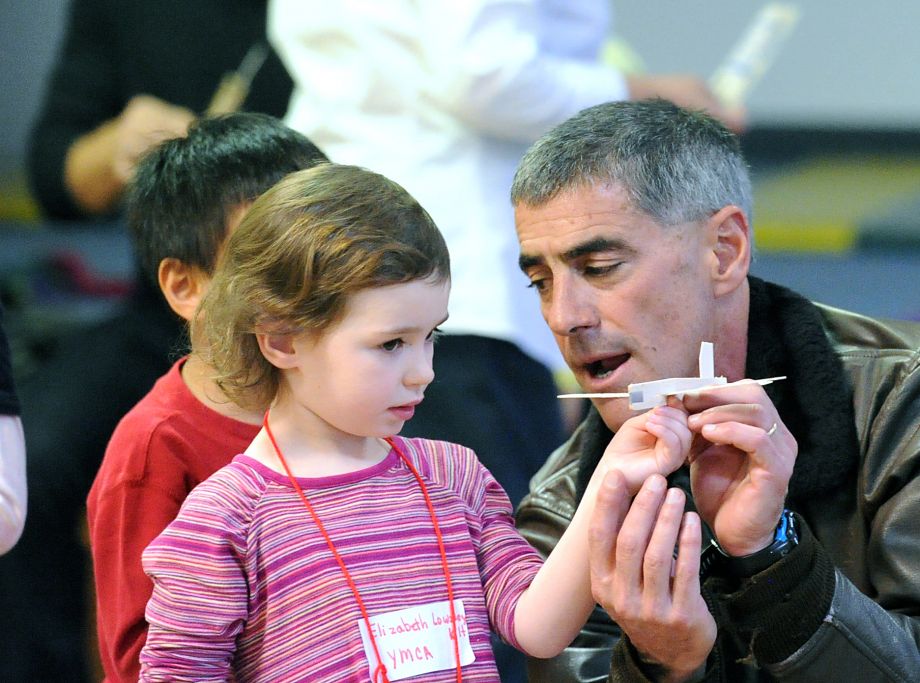
Greenwich preschoolers get to fly model planes courtesy of a pilot veteran

Posted in Model Airpanes | Tagged , | Leave a comment

A DMV for Drones? Inside the FAA’s Clumsy Push to Regulate Flying Computers

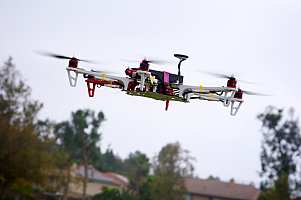
Richard Unten/FlickrRichard Unten/FlickrAt long last, commercial drone technology has developed to the point where businesses and consumers alike can take them to the skies for fun and profit. The benefits of mass drone flight are projected to be enormous, with applications ranging from instant package delivery to manufacturing to lifestyle video-blogging. But a series of poor proposals from the Federal Aviation Administration (FAA) threatens to ground major parts of this hot industry just as it starts to take flight.

Drones, or “unmanned aerial vehicles” (UAVs) as the acronymically-inclined like to call them, are merely computers with wings. They range in size from charming toys weighing under a few pounds to crafts that are almost large enough for human passengers. They can be controlled by a

Article source: https://reason.com/archives/2015/11/10/faa-versus-drones

Posted in Model Airpanes | Tagged | Leave a comment

From the archives: Model airplanes take to sky in 1961 – Tri

Contestants prepare their model airplanes for takeoff during a 1961 contest which took place at the old bombing range north of Pasco.

The event was sponsored by the Tri-City Radio Control Modelers.

Article source: http://www.tri-cityherald.com/news/local/article44302047.html

Posted in Model Airpanes | Tagged , | Leave a comment

3-D printing: Industrial’s newest fad

Contributed by Elise Couston, Senior Managing Director at Newmark Grubb Knight Frank

Couston

Is there a new industrial revolution on the way?  3-D printing, also known as additive manufacturing, is a relatively new production technology that is predicted to have far-reaching impacts on most aspects of our lives. Even though the technology is in its infancy in terms of current implementations, 3-D printing is beginning to dramatically change the way products are created and produced, which could alter the future of demand for industrial and retail real estate.

3-D manufacturing is defined as the process of making three-dimensional solid objects from a digital file.  Using an additive process, the printer creates an object by laying down successive layers of material until the entire object is produced. Each of the layers can be seen as a thinly-sliced horizontal cross-section of the final product.

The original additive manufacturing (AM) equipment and materials were developed in the 1980s. In 1981, Hideo Kodama, of the Nagoya Municipal Industrial Research Institute, invented two AM fabricating methods of a three-dimensional plastic model with photo-hardening polymer. The first commercial 3-D printer was based on a technique called “stereo-lithography”, or STL, invented by Charles Hull of 3-D Systems Corporation in 1984. Hull’s contribution is the design of the STL file format widely accepted by 3-D printing software, as well as the digital slicing and other infill strategies common to many processes today. Subsequent techniques were developed at Stanford and Carnegie Mellon

Article source: http://www.rejournals.com/2015/11/11/3-d-printing-industrials-newest-fad/

Posted in Model Airpanes | Tagged | Leave a comment

For $19000, Would You Own This 2011 Saab 9-4x That You Never Even Knew Existed?

For $19,000, Would You Own This 2011 Saab 9-4x That You Never Even Knew Existed?

Today’s Nice Price or Crack Pipe Saab is a car I’ll bet you didn’t even know you could buy. We’ll just have to see if this extremely rare and low mileage beast is priced so that you should also consider buying it.

The demon that possessed Linda Blair’s character in the movie The Exorcist didn’t really give a damn about being a total dick all the time. In contrast, yesterday’s custom 1971 Dodge Dart Demon pickup, looked to be both cheerful and useful. Well, useful to a point, as its lack of a tailgate and probable load carrying capacity comparable to a twelve-year old girl.

You know what else was limiting? That car’s seven-grand price, that’s what. Fully 70% of you didn’t like that despite it being a full-grand shy of what the car went for a year ago. I guess it’s lucky we didn’t see it back then.

Advertisement

Now, here’s a car that you are unlikely to have seen – ever. A 2011 Saab 9-4x.

For $19,000, Would You Own This 2011 Saab 9-4x That You Never Even Knew Existed?

I saw one once. It was at the 2010 L.A. Auto Show, where the 9-4x

Article source: http://jalopnik.com/for-19-000-would-you-own-this-2011-saab-9-4x-that-you-1741420439

Posted in Model Airpanes | Tagged | Leave a comment