Article source: http://www.startribune.com/local/south/275321051.html
The Royal Canadian Air Force has quietly turned to an unusual source for spare parts to keep its venerable search-and-rescue airplanes flying: a museum.
The Citizen has learned that, in July 2012, air force technicians raided an old Hercules airplane that is on display at the National Air Force Museum of Canada because they needed navigational equipment for a similar aircraft still in use.
The revelation highlights the difficulties military personnel have increasingly faced in keeping Canada’s ancient search-and-rescue planes flying after more than a decade of government promises to buy replacements — with no end in sight.
The air force museum is on Canadian Forces Base Trenton and boasts a large collection of military aircraft that have been retired and subsequently placed on display.
Among them is an E-model C-130 Hercules transport aircraft that entered service in 1965 and was used in a variety of roles before being retired in 2010 and given to the museum the following year.
Museum curator Kevin Windsor said classified equipment is typically taken off the display aircraft, but otherwise the museum tries to keep the aircraft as close to operational as possible to give visitors an authentic experience.
It was during his Windsor’s second week on the job that the search-and-rescue squadron at CFB Trenton contacted the museum’s executive director, retired lieutenant-colonel Chris Colton, to see if they could go through the Hercules.
In particular, Windsor said, they were looking for two inertial navigation units that they could take from the museum’s airplane and install in one of their H-model
Article source: http://ottawacitizen.com/news/politics/royal-canadian-air-force-raided-museum-for-search-and-rescue-airplane-parts
Courtesy Photo
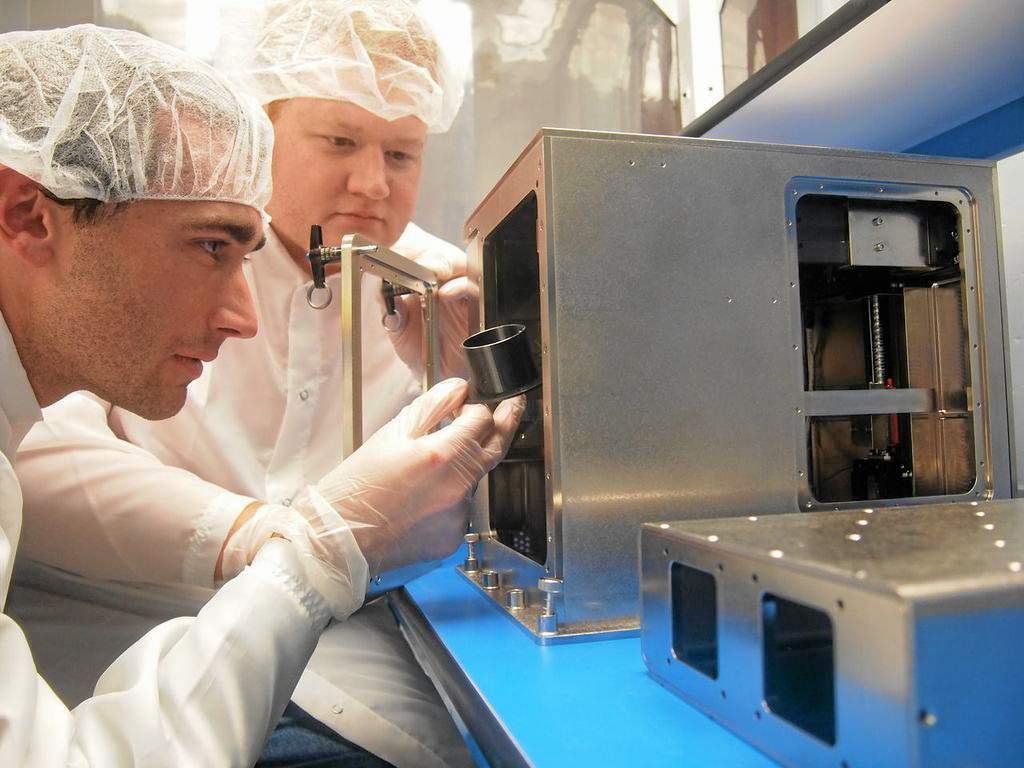
Star Trek’s replicator technology is coming to a galaxy near you. This week, Hawthorne-based SpaceX will carry the first 3-D printer into space, where NASA hopes astronauts will one day be able to print replacement parts on long-distance missions.
“[W]e could go from having a part designed on the ground to printed in orbit within an hour to two from start to finish,” NASA’s 3-D printing project manager Niki Werkheiser said in a statement. “The on-demand capability can revolutionize the constrained supply chain model we are limited to today and will be critical for exploration missions.”
The 3-D printing process, also called “additive
Article source: http://www.pasadenastarnews.com/business/20140914/spacex-to-carry-3-d-printer-to-space-station
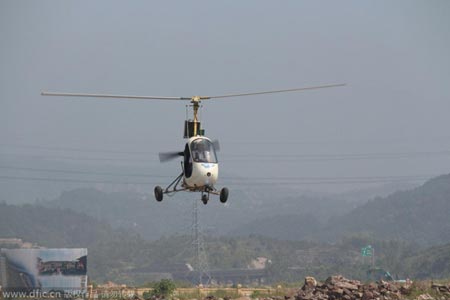
Jin Shaozhi flying the White Swan in Zhejiang. (Internet Photo)
Unlike most people in their 70s, Jin Shaozhi, a native of Hangzhou, Zhejiang, is keen on flying with self-made airplanes.
Jin has invested over US$30,000 and countless time training to assemble and pilot planes over the last eight years. His latest work, the White Swan, can fly at an altitude of 1000 meters, according to media in Hangzhou.
Jin was a doctor before he retired several years ago. His penchant for planes started 30 years ago as a part-time model airplane trainer. The team he led won medlas at national amateur model airplane competitions.
“To a fan of model airplanes, the biggest dream is to actually fly a plane in the sky,” said Jin, who finally had all the time in the world to immerse himself in the making and flying of airplanes after he retired.
Jin has received flight trainings in various models. He has bought two sets of Bee 3C model planes, one in 2007 and another in 2010. Bee 3C is mainly used for agricultural purposes.
Later, he started making his own planes from scratch. “If you know about model airplanes, it is not hard to make a real plane
Article source: http://www.wantchinatimes.com/news-subclass-cnt.aspx?id=20140915000008&cid=1303
(Photo : Internet Photo) 71-year old Jin Shaozhi flies his assembled plane, the White Swan in Zhejiang.
Hangzhou, Zhejiang native Jin Shaozhi is not your ordinary grandpa after flying a self-made airplane he calls the White Swan.
The 71 year old has spent eight years in training to assemble planes and how to pilot them. He spent more than US$30,000 in this endeavor. His latest creation, the White Swan, has the capacity to fly at a 1000-meter altitude. This was according to a media report in Hangzhou.
Like Us on Facebook
The airplane enthusiast was a doctor by profession before his retirement a few years back. His interest in planes started about 30 years ago after working part time as a model airplane trainer. Jin’s team has won several awards during amateur model airplane contests held nationwide.
After retiring, Jin started making planes from scratch. He said that a person who knows about model planes would not find it so hard to make a real airplane and fly it. Furthermore he said the parts should be assembled according to the pattern after multiplying the specs of the model plane by six.
Jin has also received different trainings for various plane models. He also owns two Bee 3C model planes which he bought in 2007 and 2010, respectively. Bee 3C is a type of plane used for agricultural ventures.
According to Jin, his ultimate dream was to fly an airplane after being
Article source: http://www.chinatopix.com/articles/10638/20140915/71-year-old-chinese-grandpa-flies-his-assembled-plane.htm
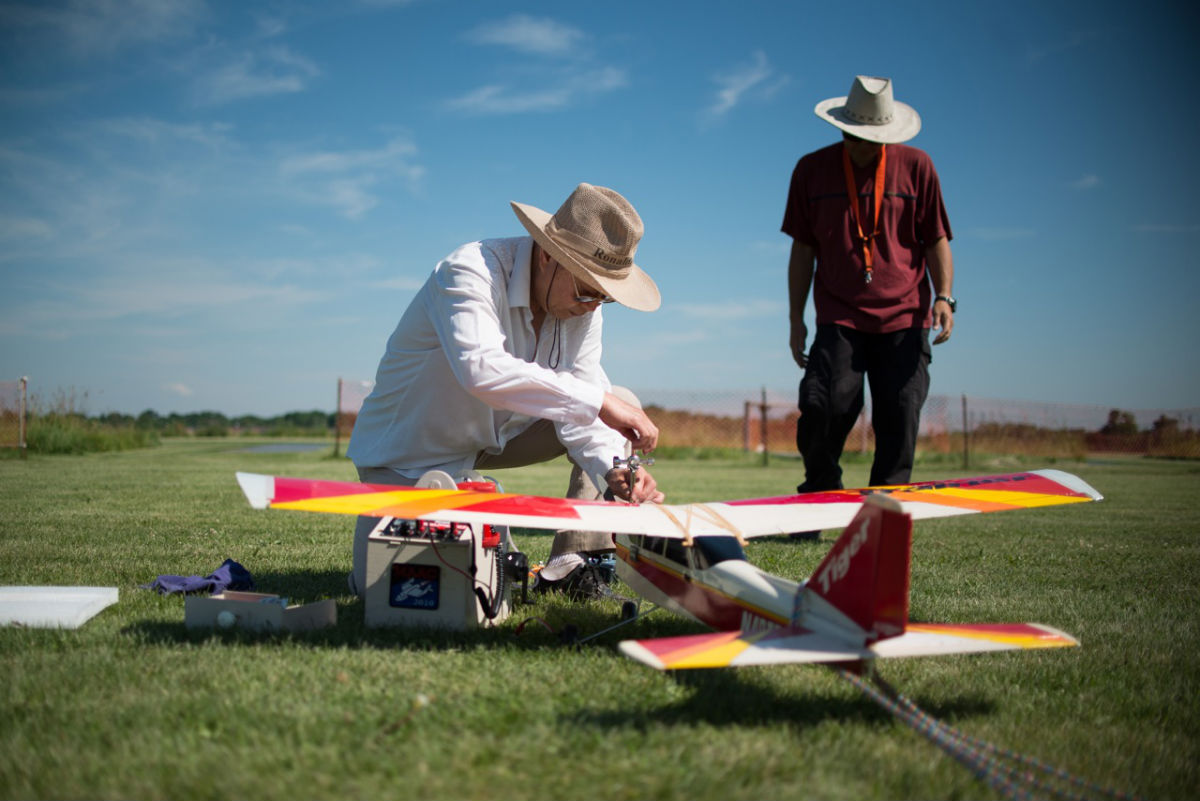
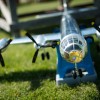
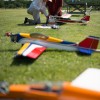
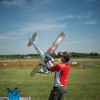
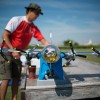
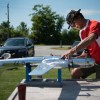
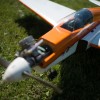
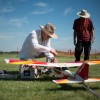
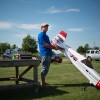
Radio Control Flying Club of Toronto lets model aviation enthusiasts take to the skies.
Article source: http://torontoist.com/2014/09/flying-high-with-torontos-model-airplanes/
The Royal Canadian Air Force had to get creative when seeking out essential parts for its search-and-rescue airplanes, and found a quick fix by raiding a plane at Canada’s National Air Force Museum.
In July 2012, air force technicians used the navigational units from an old Hercules plane on display at the museum to install in a similar plane still in use, the Ottawa Citizen reported Monday.
ADVERTISEMENT
ADVERTISEMENT
The National Air Force Museum on the Canadian Forces’ Trenton Base in Ontario features a large collection of retired military aircraft. Museum curator Kevin Windsor told the Citizen that classified equipment is typically taken off the display planes, but the museum tries to keep the aircraft as close to operational as possible to give visitors an authentic experience.
The search-and-rescue squadron at the Air Force base in Trenton contacted the museum’s executive director, retired Lt. Col. Chris Colton, to ask permission to examine the Hercules, in search of two inertial navigation units.
The crew was looking to take the units from the museum’s airplane and install them in an H-model Hercules, which could be anywhere from 20 to 40 years old. An E-model C-130 Hercules transport aircraft that entered service in 1965 and was given to the museum in 2011 was a good match.
“They sort of called [Colton] up and said ‘Hey, we have these two INUs [navigation units] that we can’t use. Do you have any on yours?’ ” Windsor told the Citizen. “Some of the parts are interchangeable. They just kind
Article source: http://www.foxnews.com/world/2014/09/15/canadian-air-force-snags-plane-parts-from-museum-to-fix-ailing-aircraft/